
5 BEST Cameras For Beginners in 2024
What’s up guys, today’s video is on the top 5 best cameras for beginners in 2024. Through extensive research and testing, I’ve put together a list of options that’ll meet the needs of different types of buyers. So whether it’s price, performance, or its particular use, we’ve got you covered. For more information on the products, I’ve included links in the description box down below, which are updated for the best prices. Like the video, comment, and don’t forget to subscribe. Now let’s get started.
Canon EOS R100
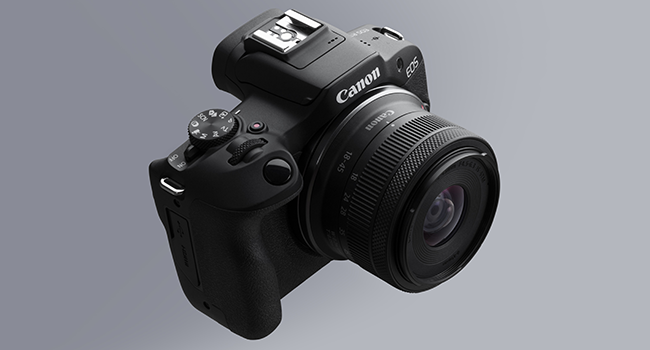
Our top pick for the best entry-level camera in 2024 is the Canon EOS R100. Despite being targeted at novices, the R100 packs a punch that even seasoned photographers can appreciate. While the absence of a touchscreen might deter smartphone enthusiasts initially, the 24.1-megapixel sensor, robust autofocus, and an impressive lineup of lenses make the R100 an ideal choice for anyone looking to elevate their photography game beyond smartphone capabilities.
This extends to photography students and hobbyists seeking a high-value first camera. The R100 is user-friendly enough for a novice to capture stunning images in automatic mode. However, its true potential shines through when you switch to semi-automatic or manual modes, enabling creative possibilities beyond what a phone can offer.
Even if you’re not familiar with the camera’s settings, the intuitive menus provide descriptions and on-screen examples of the various modes, facilitating immediate use. Features such as Creative Assist allow adjustments to parameters like contrast, brightness, and background blur without the need for technical knowledge. When you’re ready to venture into semi-automatic or manual mode, the exposure dial offers precise control within reach.
The 24.1 megapixel APS-C image sensor, an enhanced version of one in the popular Canon EOS M50 Mark II, delivers rich details and facilitates a shallow depth of field. For shooting distant subjects like wildlife or sports, the sensor’s 1.6K crop factor extends the range of your lenses. Although primarily designed for still photography, the R100 also supports Full HD and 4K video recording in both portrait and landscape orientations, perfect for quick sharing and uploading.
A built-in pop-up flash enables shooting in low-light conditions, while a hot shoe atop the flash accommodates accessories like additional flashes or vlogging microphones. Full HD recording supports dual pixel AF up to 60p for semi-slow motion, while 720p allows for full slow motion at 120p. Canon’s digital image stabilization can be applied in all modes to reduce camera shake, offering exceptional value for its price.
Nikon Z fc
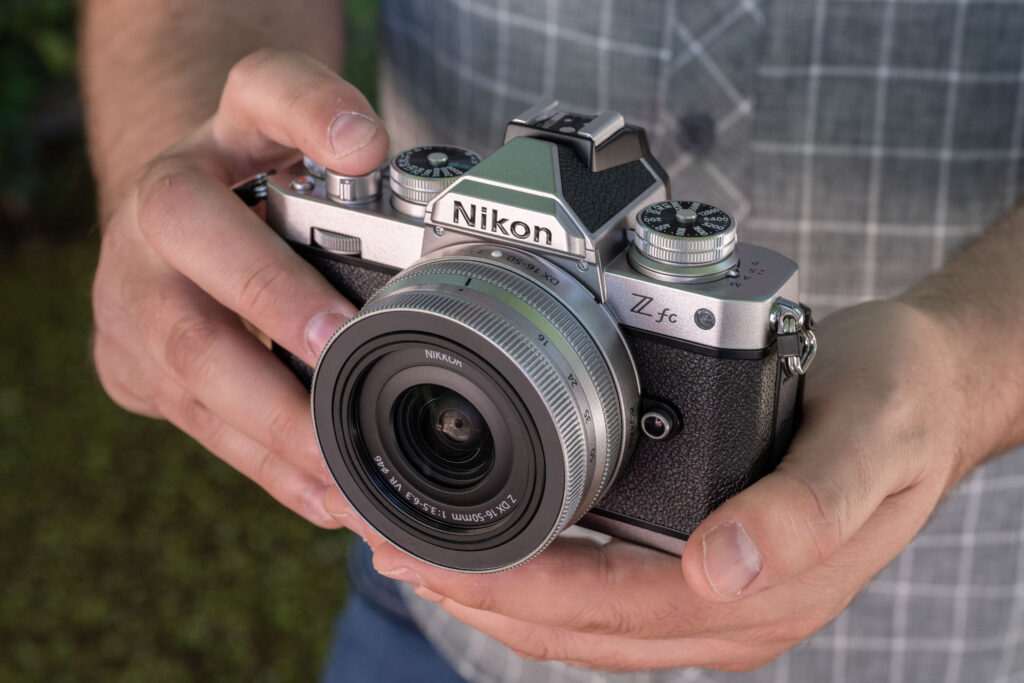
It’s hard to find a better option in this price range. We now present the Nikon ZF-C, a mirrorless camera that has won the hearts of beginners with its unique blend of vintage aesthetics and modern technology. The ZF-C is reminiscent of Nikon’s classic FM2 SLR, featuring analog dials that add to the retro feel.
Technically, it’s an upgraded version of the Z50 model, introduced two years earlier, with some notable enhancements. The ZF-C employs the identical 20.9MP sensor of the Z50, providing an ISO range from 100 to 51,200, which can be stretched up to 204,800. It offers burst shooting at a maximum of 11fps with continuous autofocus and 5fps with a live view between frames.
The camera allows shutter speed adjustments from 30 to 1 4000th of a second in full stop increments using the top dial. For more granular control, you can opt for 1 third increments via the electronic rear dial. The autofocus system uses on-sensor phase detection with 209 selectable points.
Significant upgrades from the Z50 include eye detection AF and animal detection AF for both stills and video recording. Various focus area options are available, from a precise point for single AF mode to wider areas perfect for tracking erratic movements in CAF. On the back, the ZF-C hosts a fully articulated touchscreen, similar to other contemporary cameras.
A notable addition is the USB-C port, used for charging the battery and powering the camera. However, it requires a 3A input, which might not be compatible with some power banks and USB mains chargers. Battery life is estimated at 300 shots per charge, although this can be extended significantly with regular burst shooting.
The ZF-C’s shooting menu is packed with useful features such as multiple exposure, high dynamic range shooting, focus bracketing, and silent shooting. In-camera RAW conversion enables you to tweak your images before sharing, complemented by a plethora of editing options in Nikon’s extensive retouch menu. Good stuff, a thumbs up from here.Introducing the Canon US SL3, a worthy successor to the popular US Rebel SL2. This model boasts several notable enhancements, including an upgraded processor that bolsters battery life and supports 4K video. The continuous eye-detection autofocus is a welcome addition.
Canon EOS Rebel SL3
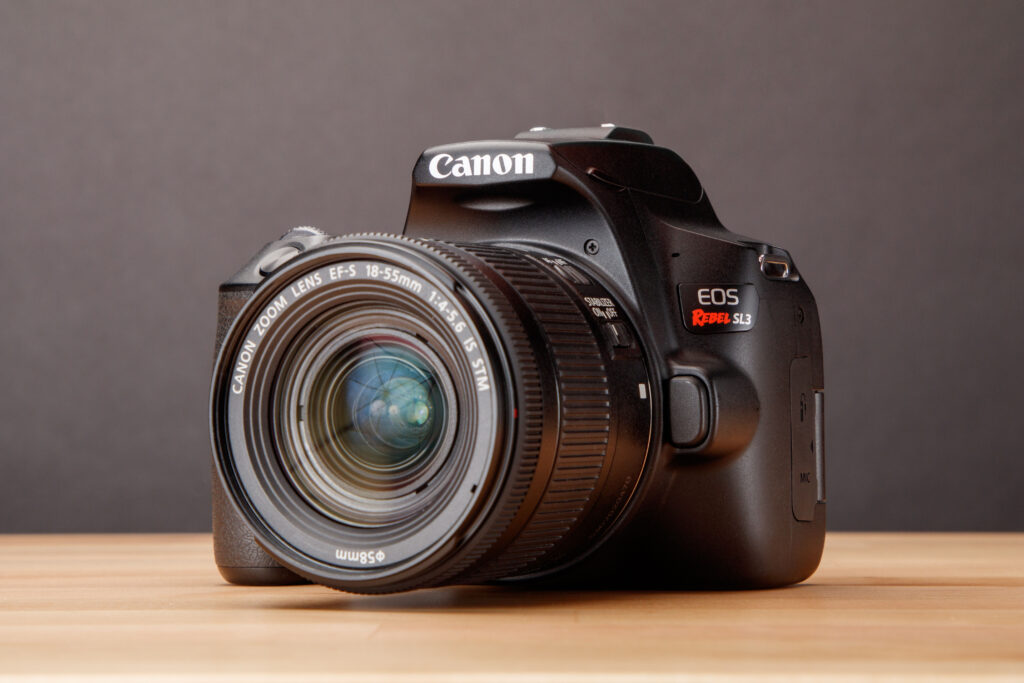
The Canon US Rebel SL3 is an ideal choice for first-time DSLR users, budget-conscious photography enthusiasts, and families. Its affordability, user-friendly operations, and integrated guide system make it a standout choice. It’s packed with features that allow users to delve into all facets of photography, learning fundamental concepts like aperture, shutter speed, and depth of field through its built-in help system.
Yet it maintains the simplicity of a point-and-shoot camera. Vloggers will find the fully articulated touchscreen with side hinges a compelling feature coupled with a 3.5mm microphone jack that ensures superior audio quality for videos. As the smallest and lightest DSLR on the market as of April 2019, the Canon US Rebel SL3’s compact dimensions of 4.82 x 3.65 x 2.75 inches and weight of 15.84 ounces with battery and card make it highly portable.
Despite its lightness, the camera feels well-balanced, even with the kit lens fully extended. Available in black or white, the SL3 features a comfortably deep grip suitable for diverse hand sizes. The responsive, fully functional touchscreen allows you to focus, scroll through menus, select settings, and review images effortlessly.
Live View offers access to the dual-pixel CMOS AF with Eye Detection AF, ensuring your subject remains in focus. The external buttons are clearly labeled, and the menu system is logically organized and easy to navigate. Users can choose between a standard menu or Canon’s guided display that provides text and visual aids for each setting.
The SL3 performs admirably in high-contrast settings, balancing highlights and shadows effectively while preserving detail in darker subjects. Thumbs up! Continuing our series of 2024 camera reviews, we spotlight the
Olympus OM-D E-M10 Mark IV
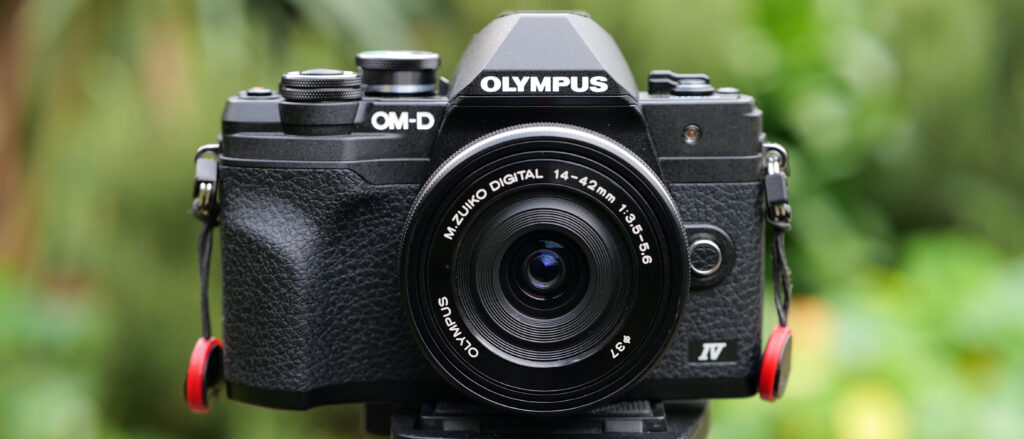
Olympus OM-D E-M10 Mark IV. Despite its seemingly complex name, this camera is a hidden gem that often goes unnoticed, especially by those seeking a compact device with a robust emphasis on photography.
Over time, Olympus has meticulously refined the E-M10 Mark IV, maintaining its dedication to capturing breathtaking images. Equipped with a 20-megapixel Micro Four Thirds sensor, a 3-inch flip-up touchscreen, and an in-body 5-axis image stabilization feature, this camera stands head and shoulders above most smartphones and pocket cameras. For novices or photography enthusiasts ready to elevate their skills, this camera presents a compelling choice.
The OM-D E-M10 Mark IV’s compact, user-friendly design makes it an ideal entry-level mirrorless camera. Whether you’re a newbie or a passionate photographer seeking a small device that consistently delivers stunning photos, this camera deserves a spot on your shortlist. While it may lack some high-end features like phase detection autofocus, 4k 60p video, and microphone headphone inputs common in pricier models, the E-M10 Mark IV excels as a still camera.
It also offers quality video capabilities when necessary, making it one of the best budget-friendly and travel-friendly cameras available, especially for those who’ve splurged on airline tickets and are looking for a cost-effective photography solution. The camera’s intuitive button layout and Bluetooth Wi-Fi functionality make it particularly appealing to smartphone photographers venturing into the realm of interchangeable lens cameras. A key selling point is its superior in-body image stabilization, IBIS, which mirrors the system used in Olympus’s award-winning flagship AM1 series.
This feature proves invaluable when capturing images handheld at slower shutter speeds. While the 20-megapixel resolution may not seem groundbreaking, it marks a significant upgrade from the previous model’s 16-megapixel sensor, keeping the E-M10 Mark IV competitive. The 3-inch LCD touchscreen is the most advanced in the series to date, offering a 90-degree upward tilt for waist-level shooting and a 180-degree downward flip.
The E-M10 Mark IV’s 2.36-M.OLED viewfinder, identical to its predecessors, delivers a crisp view of your subject, while also displaying top-outed settings. Though the autofocus system may not be the most cutting-edge in this camera category, it delivers consistent results, which is the primary expectation from any camera autofocus. This is a quality product, and all we can do is recommend it.
Fujifilm X-S10
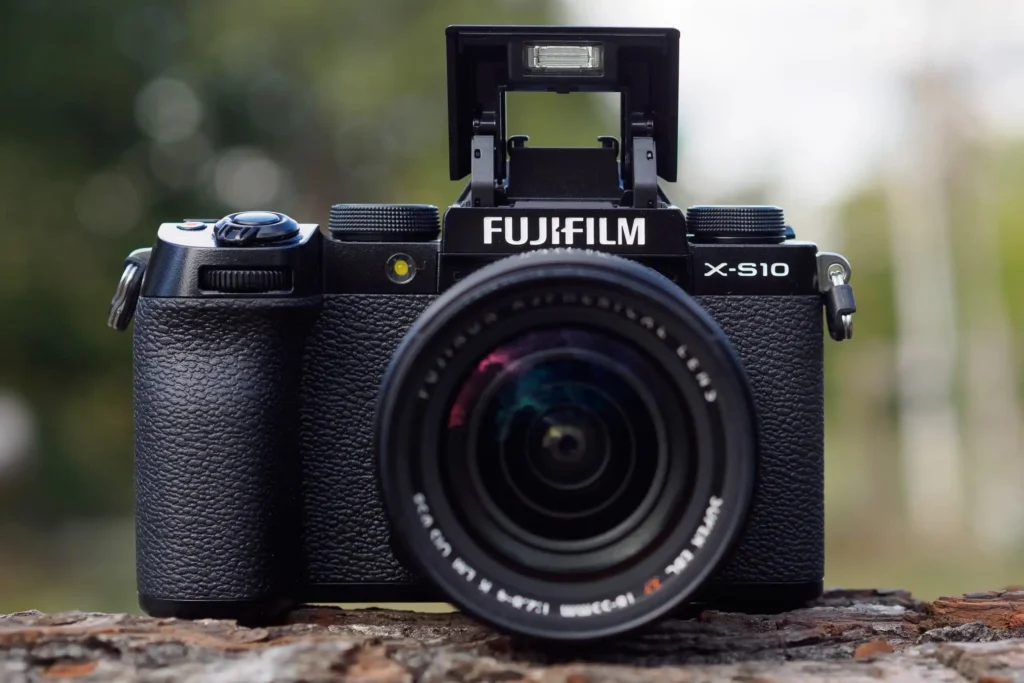
We are thrilled to present the winner of our 2024 Best Camera for Beginners award, the Fujifilm X-S10. This compact, mid-range mirrorless camera is an exceptional choice that encapsulates most of the shooting prowess of the Fujifilm X-T4 in a smaller, more manageable body, complete with in-body image stabilization, IBIS, and superior handling. While it lacks official weather protection and its tracking autofocus isn’t as impressive as its Sony counterparts, these minor drawbacks do not detract from its overall performance.
If you’re considering your first mirrorless camera or contemplating switching from a DSLR, the Fujifilm X-S10 should be a top contender. This camera successfully integrates many flagship features of the Fujifilm X-T4, including IBIS, into a less expensive and more compact body, making it an attractive option for beginners and photography enthusiasts. The Fujifilm X-S10 is designed as a versatile tool, equally adept at capturing videos and still images.
It boasts a robust 26.1-megapixel X-Trans CMOS 4 sensor and X-Processor 4, along with the capacity to record uncropped 4K 30p video. When compared to its competitors, the X-S10 stands out. Its 4K video quality and adaptability rival those of the Nikon Z50 and Sony A6600, establishing it as one of the leading YouTube cameras.
Though it may not be the go-to choice for action photographers, the X-S10’s IBIS system is a significant asset for a camera of its size. For those who frequently shoot handheld, this feature can enhance image quality by enabling faster shutter speeds. This alone gives it a considerable edge over the Nikon Z50, Fujifilm X-T30, and even the Fujifilm X-T3.
Combine this sensor-based stabilization with the Fujifilm X-S10’s other appealing features, retro style, comfortable grip, superior image, and video quality, and you have one of the best mirrorless cameras at this price point. It’s also an excellent choice for those seeking a versatile travel camera. The design of the Fujifilm X-S10 is a blend of classic Fujifilm aesthetics and a departure from conventional mirrorless cameras.
At first glance, it appears to be a somewhat smaller Fujifilm X-T4 with a larger, more substantial grip. Despite this, the size difference between the two models is minimal. Overall, this model delivers top-notch performance at the best possible price-quality ratio.
You want it the best, you got it. So that’s it for the top 5 cameras for beginners in 2024. Like, comment, and subscribe to receive notifications about our latest video.
MGN